Published: 13.05.2026
All about the Sandgrouse
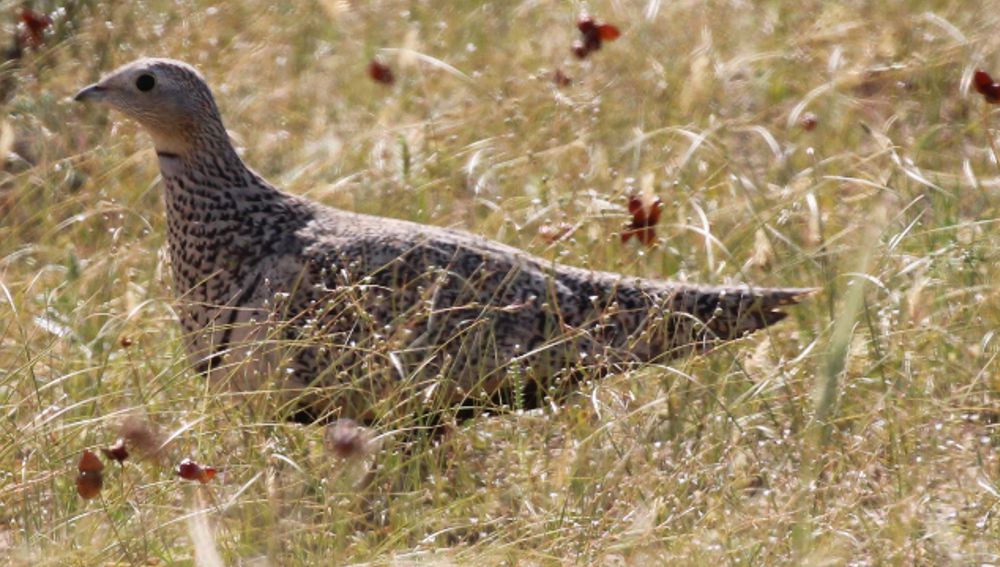
In Turkmenistan, the sandgrouse family is represented by four species: the Black-bellied Sandgrouse (Pterocles orientalis), the Pin-tailed Sandgrouse (Pterocles alchata), Pallas's Sandgrouse (Syrrhaptes paradoxus), and the Senegal Sandgrouse (Pterocles senegallus). According to scientific sources, the Senegal Sandgrouse was previously recorded in the Amu Darya valley near the village of Kelif; however, reliable data on its presence has been absent in recent years. Population monitoring and data collection for the Black-bellied, Pin-tailed, and Pallas's sandgrouse are conducted in state nature reserves during both seasonal migration periods and within the habitats of sedentary groups.
The Black-bellied Sandgrouse, locally known as "tural," is the most widespread representative of the family and was historically significant as a game bird. In our country, it is a migratory breeding species, although part of the population remains for the winter, allowing these birds to be seen in lowland areas throughout the year. Their typical habitats include foothills as well as desert and semi-desert zones with dense soils. The mass arrival of these birds is noted in March and the first half of April, with departure occurring in October.
The birds arrange their clutches in small depressions on clayey sites, and by mid-June, the chicks appear. In the summer heat, adults make regular flights to watering holes, which are sometimes located at a considerable distance from the nests. They are most often observed near water during the morning hours, from 8:00 AM to 10:00 AM. These birds not only transport water in their crops but, according to observers, intentionally soak their breast feathers to deliver life-saving moisture to their chicks.
In the Mane-Chache Wildlife Sanctuary of the Kopetdag State Nature Reserve, large concentrations of these birds are observed in October and November, where appropriate conservation measures are carried out annually. During the winter period, additional feeding is organized in areas where sandgrouse, cranes, and little bustards concentrate. In July, sandgrouse leading their chicks are found within the sanctuary. Autumn observations in the Gyzylarbat and Bereket districts of the Balkan region also confirm a high population density of the species in lowland areas.
Monitoring from recent years provides an up-to-date picture of bird distribution. In early April 2024, two flocks totaling 25 individuals were spotted on the Keleta–Bakja route. In late April 2026, pairs were recorded selecting nesting sites in the area of the Ustyurt heights. Heavy rainfall this year has promoted vigorous vegetative growth, creating an excellent food base. The diet of sandgrouse primarily consists of plants, supplemented by a small number of insects. Protecting the habitats of these birds and ensuring proper protective measures during their breeding and migration periods will serve as a vital contribution to increasing the population of these unique representatives of our nature.