Published: 04.06.2026
White saxaul — an amazing plant of nature
In accordance with the state environmental policy of the country, comprehensive and large-scale work is being carried out to protect the environment, ensure the rational use of land, water, soil, and biological resources, prevent air pollution, and combat desertification. Tremendous efforts are being made to transform our Motherland into a blossoming garden.
The Karakum Desert occupies eighty percent of the country's total area. Among the world's largest deserts, it stands out for its variable, unstable, and extremely arid climate. The beauty of the Turkmen land, its unique natural wealth, and the originality of its flora and fauna are inextricably linked with the Karakum.
According to physical and geographical conditions, the Karakum Desert is divided into three large parts, which are the Central, Zaunguz, and South-Eastern Karakum. The largest of them is the Central Karakum, covering an area of two hundred thousand square kilometers. The desert possesses a unique flora and fauna, and one of the most amazing and widespread plants here is the saxaul. Two species of it grow in our country, which are the white saxaul and the black saxaul, also known as odjar. There is also a third species in the world, the Zaisan saxaul, which is predominantly distributed throughout Kazakhstan.
The genus name of the saxaul, Haloxylon, originates from the Greek words "halos" meaning salt and "xylon" meaning wood. The vegetation period of the white saxaul begins at the end of February. It flowers in March and April, bears fruit in September, and its seeds finally ripen at the end of autumn, in November. During the wet and warm spring period, the plant develops very actively. The white saxaul forms extensive desert-sandy open woodlands, while thickets of black saxaul occupy a smaller area.
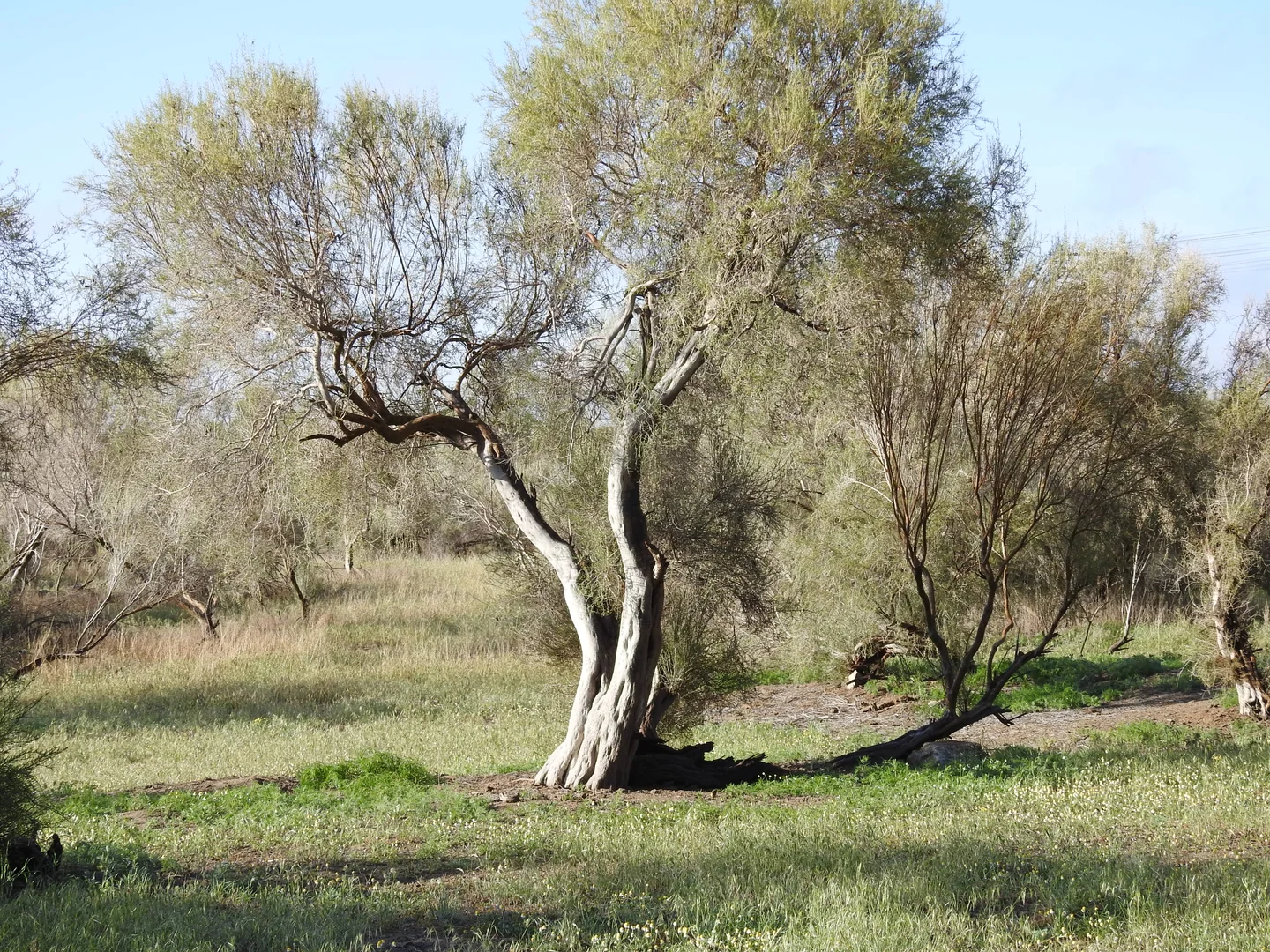
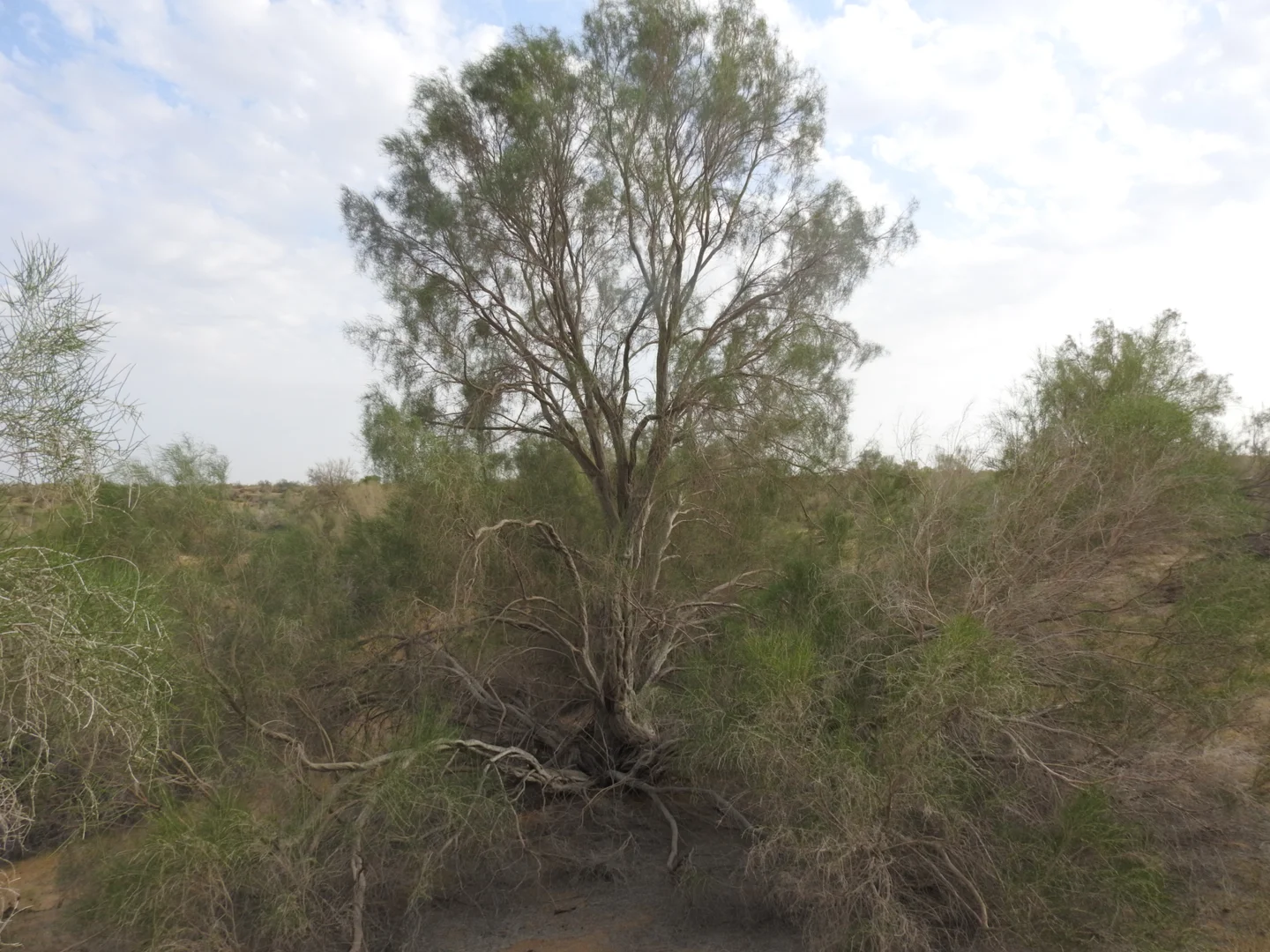
White saxaul (Haloxylon persicum) is a large shrub reaching a height of two to five meters. The plant possesses heavy but very fragile wood and light gray bark. Its young annual shoots have a light green color and a clearly defined articulated structure. The leaves are reduced and look like yellowish, pointed scales tightly pressed to the nodes of the branches. This shape helps the plant to expend moisture economically during hot weather. By this key feature, white saxaul is easily distinguished from the black one. The fruit of the plant is compressed from above. The diameter of the trunk is about ten to twenty centimeters, and the annual growth of branches reaches fifty centimeters. When the lower part of the trunk is covered with sand, the branches form adventitious roots, thereby firmly fixing the sand dunes. White saxaul has a high capacity for regeneration, as it quickly puts out new shoots even after its branches are broken off. This species grows exclusively on sands, creating sparse forests and pastures. In the winter period, camels and small cattle willingly eat its shoots, fruits, and fallen scales.
Black saxaul, or odjar (Haloxylon aphyllum), is more commonly found on plains, saline soils, and in lowlands between sand ridges. The height of the black saxaul reaches five to eight meters, and the trunk diameter is fifty to seventy centimeters. Unlike the white species, the black saxaul possesses denser and heavier wood that sinks in water. Its bark is usually light brown. Young annual shoots are noticeably thicker than those of the white saxaul and are more often colored dark green. The leaves are completely reduced and are visible only as tiny scales in the nodes of the twigs. The apex of the fruit, unlike that of the white saxaul, is not depressed but rounded and protrudes forward, resembling a small red cherry. This is a long-lived plant capable of growing for more than half a century. From one bush, it is possible to collect from two hundred grams to ten kilograms of seeds. In the first years after planting, the odjar grows slowly, but after five to six years, its development accelerates, and by twelve years, it reaches a height of four to five meters. Seed productivity depends on age and climatic conditions, meaning young specimens bear fruit poorly, and the peak of productivity occurs in the period from ten to twelve up to thirty-five to forty years. Due to the severe winter conditions of the desert, the odjar does not produce an abundant harvest of seeds every year. At the same time, it demonstrates high ecological plasticity and grows successfully in a wide variety of conditions, including areas with shallow groundwater, saline lands, sands, as well as soils of low mountains and foothills.
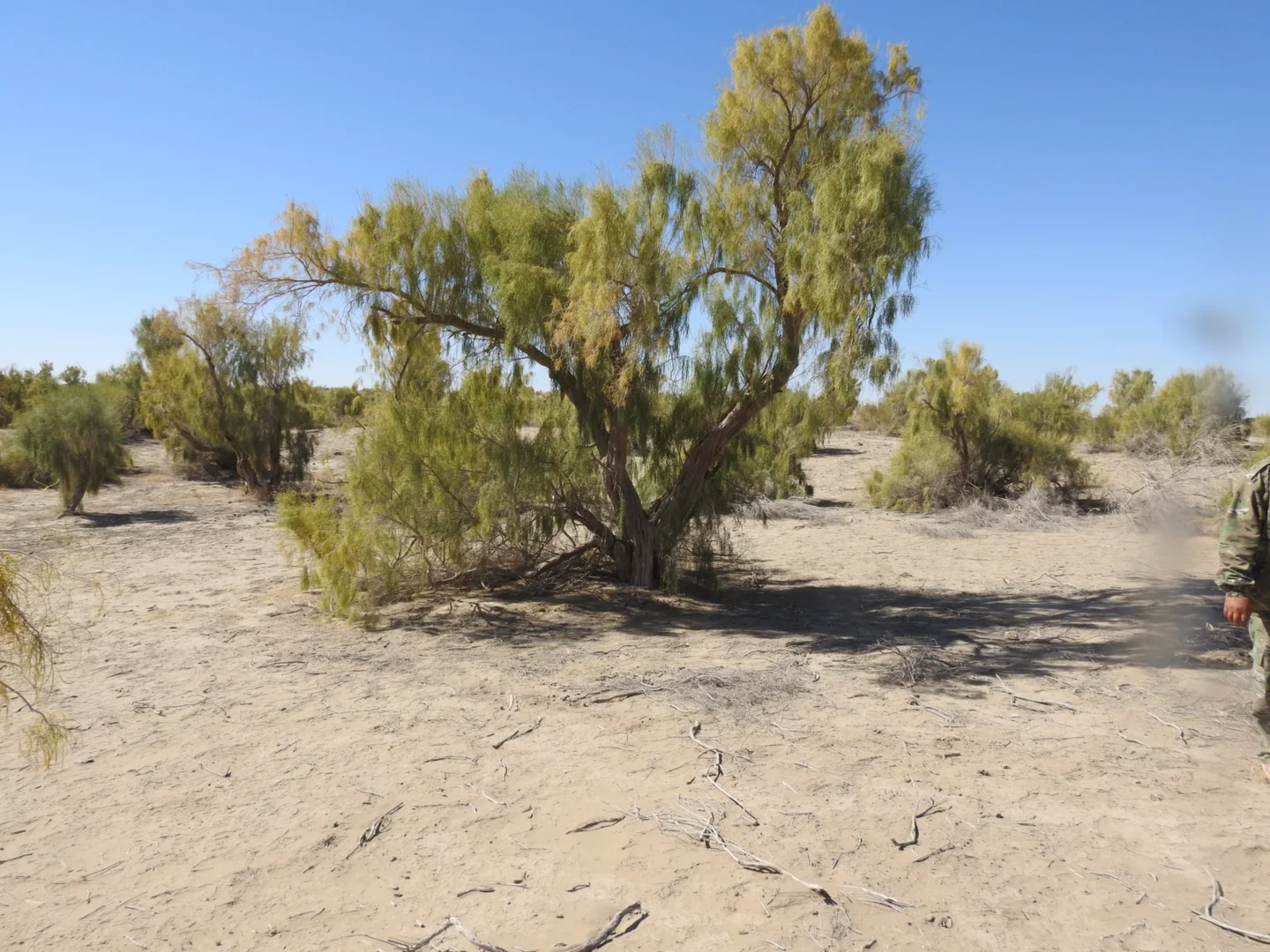
White and black saxauls act as dominants of desert plant communities in Central Asia, forming distinctive saxaul forests. White saxaul is found everywhere in sandy massifs from the south of Iran to the north and east of Dzungaria-Kashgaria. The range of black saxaul is even wider and extends from Iran to Dzungaria-Kashgaria and Mongolia. The plant is of colossal economic importance. Saxaul pastures serve as the most important forage base for sheep and camels in winter, and sometimes in summer periods. In non-gasified areas of Central Asia, saxaul wood is traditionally used as a high-quality fuel, which in its calorific value is not inferior to coal, with the wood of black saxaul being valued higher.
The scientific and encyclopedic work of the National Leader of the Turkmen people, Hero-Arkadag, titled "Medicinal Plants of Turkmenistan," contains detailed information about the rich flora of the Karakum Desert and its deep medical potential. Today, the scale of work on preserving and enriching the biodiversity of the Karakum is actively expanding in the country. Protecting, multiplying, and passing on these unique natural riches to future generations remain among the most important and urgent tasks of modern times.